Notesmyfoot

Notesmyfoot Logo Amu

Un carrier T Mobile’s Strategy to Disrupt the US Telecom Industry

Un carrier T Mobile's Strategy to Disrupt the US Telecom Industry

Introduction: Un-carrier-T-Mobile's Strategy to Disrupt the US Telecom Industry

In the highly competitive world of the telecom industry, where giants have long dominated the landscape, Un carrier T Mobile’s Strategy to Disrupt the US Telecom Industry. This blog post will delve into the innovative approach taken by T-Mobile, focusing on their utilization of business process re-engineering (BPR) to redefine customer service and ultimately disrupt the entire industry.

Section 1: Understanding Business Process Re-engineering

Business process re-engineering, or BPR, is a methodology that involves the complete overhaul of existing business processes to achieve significant improvements in performance, effectiveness, and efficiency. TMobile recognized the need for a fresh perspective and embraced BPR as a catalyst for change. T-Mobile’s BPR initiative resulted in an increased focus on customer satisfaction, improved communication and collaboration, and a more efficient use of resources. The company also achieved cost savings of more than 20% and increased productivity.

Section 2: Evaluating the Benefits of a Re-engineered Process

By re-evaluating their customer service processes, T-Mobile was able to identify pain points and inefficiencies. They implemented streamlined workflows, automated systems, and empowered employees to deliver exceptional service. The benefits were manifold – reduced wait times, improved issue resolution, and enhanced customer satisfaction. This resulted in increased customer loyalty, improved brand image, and higher sales. T-Mobile’s customer service processes are now the envy of the industry

By streamlining and automating their customer service processes, T-Mobile was able to increase efficiency and reduce costs. This allowed them to provide better customer service while also freeing up resources to focus on other initiatives. Furthermore, the improved customer satisfaction resulted in higher customer loyalty, improved brand image, and higher sales.

Section 3: Disrupting the Industry with a Bold Brand Strategy

T-Mobile understood that to truly disrupt the telecom industry, they needed more than just operational improvements. They needed a strong brand identity and a clear differentiation from their competitors. Through captivating marketing campaigns, vibrant branding, and a customer-centric approach, T-Mobile positioned themselves as the un-carrier, challenging the status quo and offering an alternative to traditional telecom companies. This shift in perception allowed T-Mobile to gain a competitive edge and, ultimately, become the second-largest telecom company in the United States.

Section 4: Navigating the Competitive Space

Disrupting a well-established industry is no easy feat. T-Mobile faced fierce competition from industry giants, but they strategically positioned themselves as the disruptor brand. They leveraged their reputation for innovation, customer-centricity, and affordability to gain market share and attract a loyal customer base. T-Mobile positioned themselves as the company that offers the best deals, with the best customer experience, and with the most cutting-edge technology. This strategy allowed them to appeal to a wider audience and gain a competitive edge over their competitors.

Section 5: Revolutionizing the Customer Service Process

One of the key areas where T-Mobile focused their business process re-engineering efforts was customer service. They revolutionized the way customer issues were handled, introducing self-service options, empowering employees to make decisions, and leveraging technology to provide seamless and personalized experiences. This customer-centric approach became a cornerstone of their disruptive strategy.

Conclusion:

T-Mobile’s disruptive strategy in the US telecom industry showcases the power of business process reengineering and effective brand management. By redefining their customer service processes and positioning themselves as the un-carrier, they challenged the industry norms and gained a competitive edge. T-Mobile’s success serves as an inspiration for businesses looking to disrupt their respective industries, emphasizing the importance of innovation, customer-centricity, and strategic process improvements. Also check out The Message Strategy behind CEAT’s “Be Idiot Safe” Campaign and to get the detail with PDF

Vitamin Shoppe’s Reinvention Efforts Fail?

Vitamin Shoppe's Reinvention Efforts Fail

Introduction: Vitamin Shoppe's Reinvention Efforts Fail?

In a dynamically changing marketplace, Vitamin Shoppe’s Reinvention Efforts Fail, companies often find themselves in the position of needing to reposition their brand to stay competitive. Vitamin Shoppe, a well-known omni-channel retailer in the health and wellness industry, recently embarked on a reinvention strategy. However, despite their best efforts, the results have been less than satisfactory. In this blog post, we will analyze the factors that led to Vitamin Shoppe’s decision to undertake a reinvention strategy, explore the competitive forces they encountered, and assess the impact of their efforts.

Section 1: About VSI

Before diving into the details of Vitamin Shoppe’s reinvention strategy, let’s take a moment to understand the company itself. Vitamin Shoppe is a brick-and-mortar business that specializes in offering a wide range of health and wellness products. With a strong customer base and a reputation for quality, the company had been a key player in the retail industry.

Section 2: Reinvention Strategy

Recognizing the need to adapt to an increasingly digital world, Vitamin Shoppe decided to revamp its brand and reposition itself in the market. The goal was to become a leading online retailer while still maintaining a strong presence in their physical stores. The company aimed to leverage its existing customer loyalty and expand its reach through strategic partnerships.

Section 3: What the Company Did

To execute their reinvention strategy, Vitamin Shoppe implemented several key initiatives. One of the notable changes was the introduction of SPARK Auto Delivery, a subscription-based service aimed at enhancing customer convenience. Additionally, they invested heavily in improving their online platform, enhancing the user experience, and expanding their product offerings to compete with e-commerce giants.

Section 4: Impact of Reinvention Strategy

Despite their efforts, Vitamin Shoppe faced significant challenges in executing their reinvention strategy. The company encountered fierce competition from online retailers who had already established a strong presence in the market. The pricing strategy, which aimed to compete with the commoditization of health and wellness products, put additional strain on their profit margins. Furthermore, cost-cutting measures impacted the overall quality and variety of products offered, leading to a decline in customer satisfaction.

Section 5: Optimism About Future Growth

While the reinvention strategy did not yield the desired results, Vitamin Shoppe remains optimistic about future growth opportunities. The company recognizes the importance of operational excellence and is investing in information technology to improve their supply chain, inventory management, and overall efficiency. By leveraging customer data and insights, they aim to regain their competitive edge and deliver a seamless shopping experience across all channels.

Conclusion:

In conclusion, Vitamin Shoppe’s reinvention efforts have fallen short of expectations. Despite their brand management and repositioning attempts, the company faced intense competition, pricing challenges, and a decline in product quality. However, with a renewed focus on operational excellence and leveraging technology, Vitamin Shoppe remains hopeful about their future growth prospects. The dynamic nature of the retail industry demands constant adaptation, and it will be interesting to observe how Vitamin Shoppe evolves in the coming years. Also check out Tata Motors’s Jaguar Land Rover Turnaround Strategy and to get the detail with PDF

Revving Up: Tata Motors’s Jaguar Land Rover Turnaround Strategy

Revving Up: Tata Motors's Jaguar Land Rover Turnaround Strategy

Introduction: Revving Up: Tata Motors's Jaguar Land Rover Turnaround Strategy

In the ever-evolving landscape of the automotive industry, Tata Motors’s Jaguar Land Rover Turnaround Strategy, few brands carry the prestige and allure of Jaguar Land Rover (JLR). This British luxury car manufacturer, now under the wing of Tata Motors, has experienced its fair share of ups and downs. In this blog post, we will dive into the growth of JLR, examine its competitive strategies, explore the circumstances surrounding its acquisition by Tata Motors, analyze its product strategy post-acquisition, and dissect the transformation strategy that has been instrumental in its turnaround.

Section 1: Jaguar Land Rover - A Background Note

Before delving into the intricate details of JLR’s turnaround, let’s take a moment to appreciate the brand’s legacy. With a rich heritage dating back to 1922, Jaguar Land Rover has built a reputation for crafting vehicles that blend opulence, performance, and British elegance. From the iconic Jaguar E-Type to the rugged Land Rover Defender, JLR has consistently pushed the boundaries of automotive engineering and design.

Section 2: Tata Motors's JLR Turnaround Plan - Can It Recover from the Slowdown?

The global automotive industry is no stranger to challenges, and JLR has faced its fair share of obstacles. Economic downturns, changing consumer preferences, and intensified competition have all contributed to a slowdown in JLR’s growth. However, Tata Motors, recognizing the potential of this iconic brand, crafted a comprehensive turnaround plan to steer JLR back on track. This plan aimed to address the key issues plaguing JLR and position it for sustained success in the highly competitive luxury car segment.

Section 3: JLR's Competitive Strategies

To understand JLR’s competitive strategies, we must first analyze the competitive structure of the industry in which it operates. Ranging from traditional luxury car manufacturers to emerging electric vehicle (EV) players, the automotive landscape is fiercely competitive. JLR’s competitive strategies encompass a multifaceted approach, including product differentiation, technological innovation, and a relentless focus on customer experience.

Section 4: The Circumstances of JLR's Acquisition by Tata Motors

The acquisition of JLR by Tata Motors in 2008 marked a significant turning point in the brand’s history. At a time when JLR was facing financial turmoil under the ownership of Ford Motor Company, Tata Motors saw an opportunity to breathe new life into the iconic British brand. This section will delve into the circumstances surrounding the acquisition and shed light on how Tata Motors strategically positioned itself to capitalize on JLR’s potential.

Section 5: JLR's Product Strategy Post-Acquisition

A key pillar of JLR’s turnaround strategy has been its product portfolio. Post-acquisition, JLR embarked on an ambitious product strategy that aimed to rejuvenate its lineup and cater to evolving consumer demands. This section will explore the brand’s foray into electric vehicles, its expansion into new market segments, and the impact of these moves on JLR’s overall performance.

Section 6: Analyzing JLR's Transformation Strategy - PESTEL Analysis

To fully comprehend the intricacies of JLR’s turnaround, it is essential to conduct a PESTEL analysis. This analysis will evaluate the Political, Economic, Social, Technological, Environmental, and Legal factors that have shaped JLR’s transformation strategy. By dissecting these external influences, we can gain valuable insights into the challenges JLR has faced and the opportunities it has seized upon.

Conclusion: Tata Motors's Jaguar Land Rover Turnaround Strategy

In conclusion, Tata Motors’s Jaguar Land Rover turnaround strategy has been nothing short of remarkable. Through astute business planning, relentless innovation, and a deep understanding of the luxury car market, JLR has managed to navigate through challenging times and position itself as a formidable player in the automotive industry. As we look to the future, it will be fascinating to witness the continued evolution and success of this iconic British brand under the guidance of Tata Motors. Also check out The Message Strategy behind CEAT’s “Be Idiot Safe” Campaign and to get the detail with PDF

The Message Strategy behind CEAT’s “Be Idiot Safe” Campaign

The Message Strategy behind CEAT's "Be Idiot Safe" Campaign

Introduction: The Message Strategy behind CEAT's "Be Idiot Safe" Campaign

The marketing communication objectives behind an ad campaign are crucial in shaping its success. In this blog post, we will delve into the message strategy behind CEAT’s “Be Idiot Safe” campaign, analyzing its creative strategy, development, and future prospects. Let’s explore how CEAT effectively communicated its message through a unique and impactful campaign

Section 1: The Launch of the Campaign - 2010

The “Be Idiot Safe” campaign was first introduced by CEAT in 2010, aiming to promote road safety and responsible driving. With a strong focus on creating awareness and educating the public, CEAT developed a powerful message strategy centered around the concept of avoiding reckless behavior on the roads. Through a series of television commercials (TVCs) and print media, the campaign successfully captured attention and initiated conversations about road safety.

Section 2: Building the Campaign - 2011 and 2014

After the initial launch, CEAT continued to build on the success of the “Be Idiot Safe” campaign. In 2011, they expanded their marketing communication objectives by incorporating cause-based marketing, aligning with NGOs and organizations dedicated to road safety. This strategic move not only strengthened the campaign’s message but also allowed CEAT to connect with a wider audience and create a positive social impact. In 2014, CEAT took the campaign further by introducing digital media into their communication mix. This innovative step enabled them to reach a tech-savvy audience and engage them through interactive content and social media platforms. By leveraging the power of digital media, CEAT effectively increased brand visibility and reinforced the importance of responsible driving.

Section 3: Taking the Positioning to the Next Level - 2017

In 2017, CEAT decided to elevate the positioning of the “Be Idiot Safe” campaign. They embraced a “360 Degree Campaign” approach, integrating various marketing communication channels to create a cohesive brand experience. CEAT strategically utilized out-of-home (OOH) media, digital media, and television commercials (TVCs) to maximize their campaign’s reach and impact. This comprehensive strategy allowed CEAT to reinforce their unique selling proposition (USP) and position themselves as a leader in promoting road safety.

Section 4: The Future of the Campaign

As CEAT looks towards the future, the “Be Idiot Safe” campaign continues to evolve. With advancements in technology and changing consumer behavior, CEAT recognizes the importance of staying relevant and adapting their message strategy accordingly. By embracing emerging media platforms, exploring innovative storytelling techniques, and continuously analyzing their target market, CEAT aims to ensure the long-lasting success of their campaign and drive a positive change in society.

Conclusion:

CEAT’s “Be Idiot Safe” campaign serves as an exemplary case study in developing a successful and longlasting ad campaign. By understanding the marketing communication objectives, analyzing the creative strategy, and creating an appropriate media mix, CEAT effectively communicates its message of road safety to a wide audience. This campaign showcases the power of a big idea, integrated marketing communications, and a strong brand positioning. As we move forward, let us draw inspiration from CEAT’s campaign and strive to create impactful and meaningful ad campaigns that make a difference. Also check out Tata Motors’s Jaguar Land Rover Turnaround Strategy and to get the detail with PDF
AMU Drama Club

AMU Drama Club

AMU Drama Club: A Legacy of Theatrical Excellence

Let’s have look at the history of AMU Drama club, the founder of this institution, Sir Syed Ahmad Khan, initiated a Drama Troupe at MAO College in 1886, the University Drama Club (UDC) found its permanent establishment in the year 1966 within the hallowed walls of Kennedy House. Prior to this, interested students and different cultural societies from the halls of residence had sporadically staged various productions in Strachey Hall and Maris Hall. However, with the completion of Kennedy Auditorium and the creation of the General Education Centre, a new era of theatre began under the patronage of stalwarts like Prof Muneebur Rehman, Prof Sajda Zaidi, Prof Zahida Zaidi, Prof Zauqi, Prof Gurudas Bhattacharya, Prof Habib Rasool, Mr. Iftekhar Alam Khan, Prof M. A. Alvi, and more.

Iconic productions by the AMU Drama Club

AMU Drama club has nurtured and produced some of the most celebrated artists in the fields of stage, film, and television. Renowned names like Habeeb Tanvir, Qadir Ali Baig, Irfan Panjatan, Surekha Seekri, Naseeruddin Shah, Dilip Tahil, and many more have graced its stages.

Some of the most iconic productions by the Amu Drama Club include Julius Caesar, Uncle Mania, Agra Bazaar, Kitab ka Kafan, Ek tha Ghulam, Darwaze Khol do, Shatranj ke Mohre, Khamosh Adalat Jari Hai, Naya Tamasha, Sakharam Binder, Rang Nagri, Panchhi Aise Aate Hain, The Bear, Inspector Matadeen Chaand Per, Bhanwar, Khander, Raah, Zero Hour, Batwara, Chaddi Pahen ke Phool Khila Hai, Janta Express, Ek Anarchist ki Ittefaqia Maut, Naqqaara, Junglee, Jo Such Nahi, Marz Badhta Gaya, Bhola Ram Ka Jeev, Pahle aap, Pyaasi Zameen, Marte Dam Tak, Chacha Chakkan, Toba Tek Singh, Khoobsurat Bala, Pagla Ghoda, Aseer-e-Hirs, Karbal Katha, Begum ki Billi, Aiyen ek Akhat, Amanat, Big B, Letter to Gandhi, Taj Mahel ka Udghatan, Aao Kahani Kahein, Laal Basta, and countless skits, mimicries, mono acting, and mimes.

Current Leadership

President: Prof. Vibha Sharma (Associate Professor, Department of English)

Vibha Sharma, an accomplished Professor in the Department of English at Aligarh Muslim University, specializes in Literary Theory, Modern Drama, Postcolonial Studies, Theatre Studies, Translation Studies, and Cultural Studies. She is a Visiting Faculty at Stockholm University, Stockholm, Sweden, and has made significant contributions to the Asian Theatre Encyclopedia published from the UK.

AMU Drama Club's 'Theatre Origins'

Recently, the Drama Club of the Cultural Education Centre (CEC), Aligarh Muslim University (AMU), organized a three-day cultural event titled ‘Theatre Origins.’ During this event, student groups staged highly-acclaimed canonical plays and a skit.

Day 1: The event kicked off with a performance of Mohan Rakesh’s ‘Aadhe Adhure,’ presented by Khurram Zuberi Theatre Studio. The play depicted the struggles of a middle-class family facing financial setbacks, featuring Nidhi Singh, Rishi Kumar, Zehra Naqvi, Faisal Nezami, and Himani Tainguria in prominent roles.

Day 2: Drama Club members performed Anton Chekhov’s ‘The Bear’ and Saadat Hasan Manto’s ‘Burqe.’ ‘The Bear,’ a one-act comedy, portrayed the story of a middle-aged landowner and a young widow in a comical situation. ‘Burqe’ was performed as a monologue, narrating the story of a young man’s love for a burqa-clad woman.

The event concluded with a skit titled ‘Babaji ki Booty,’ a production filled with laughter and entertainment.

AMU Drama Club continues to be a thriving hub of creative expression, contributing to the rich cultural tapestry of Aligarh Muslim University.

Achievement of AMU Drama club

  • Performed play “Pagla Ghoda” in a sensible structure without precedent for the historical backdrop of UDC at CEC grass in walk 2016.
  • Performed two different Pento – Emulate in 44th North Zone VC Meet.
  • Won third award in production ‘A majority rules government’ at 31st North Zone Youth Fest coordinated by AIU held at Ludhiana Horticulture College, Ludhiana.
  • Played out a road play at “Rang Mohatsav-2016” a Global Theater Fest coordinated by Public School of Show, New Delhi.
  • Won third Best Creation for the play ‘Lal Basta’ in “Josh Vihangam” 2016, an all India Theater Fest coordinated by Jamia Millia Islamia, New Delhi.
  • Won Best Chief in “Josh Vihangam” 2016, an all India theater Fest coordinated by Jamia Millia Islamia, New Delhi.
  • Won Best Content in “Josh Vihangam” 2016 an all India theater Fest coordinated by Jamia Millia Islamia. New Delhi.
  • Dramatization club Play out his originally tagged show in Sri Smash Focal point of play Karbal Katha in 2016.
  • Got greeting to play out a full length play ‘Karbal Katha at Ghalib Establishment, New Delhi in 2015.
  • Won third Award in drama ‘Exhibition hall 2050’ in North Zone Youth Fest coordinated by AIU in 2010 held at Jhansi.
  • Won Incidental award in play ‘Aishwarya Rai..Aai Hai!’ in Public Youth Fest coordinated by AIU in 2005 held at Nagpur.
  • Won third Award in play ‘Ek Koshish’ in North Zone Youth Fest coordinated by AIU in 2005, Rohtak.
  • Got greeting to perform two plays; Bhanwar at Territory Center, New Delhi in 2004.
  • Performing at Rajkiya Krishi Udyog Pradarshini consistently beginning around 2004.
  • Won third Award in drama in North Zone Youth Fest coordinated by AIU in 2003 held at Bundelkhand College, Jhansi.
  • Got unique greeting from Colleges Awards Commission to perform ‘Aishwarya Rai..Aai Hai!’ in its Brilliant Celebration Festivity in 2003.
  • Won 2rd Award in emulate in North Zone Youth Fest coordinated by AIU in 2001.
  • Won first Award in emulate in Public Youth Fest coordinated by AIU in 2001 held Banaras.
  • Won 2rd Award in production in North Zone Youth Fest coordinated by AIU in 2000 held at Rohtak.
  • Won third Award in mimicry in North Zone Youth Fest coordinated by AIU in 2000 held at Rohtak.

Sir Syed House Historical Center Aligarh

Sir Syed House

The House of Sir Syed Ahmad khan

Sir Syed House Historical Center, situated in the Aligarh Muslim University, is a notable craftsmanship exhibition among local people. Previously the historical center was Sir Syed’s home, the organizer behind Mohammedan Old English Oriental School (which was changed over into Aligarh Muslim College in 1920).

The workmanship display was shaped to multiply mindfulness among individuals about Sir Syed’s commitment to instructive and social improvement. Sir Syed House Gallery displays the individual existence of Sir Syed through his effects alongside exhibiting the historical backdrop of AMU through pictures and put-down accounts.

Sir Syed House Historical Center is separated into three exhibitions. The initial segment shows the existence of Sir Syed and his confidants; the second display features definite progressive phases of Aligarh Muslim College and the third exhibition presents photos of AMU’s grounds and its Bad habit Chancellors. The display additionally shows the photographs of the college’s occasions and accomplishments which occurred throughout the long term.

The Historical Significance of Sir Syed's House

Sir Syed’s home, situated in Aligarh, Uttar Pradesh, is a critical and verifiable milestone. It was here that he spent an extensive piece of his life and the household’s significant recollections of his commitments to training and social change. The house has been safeguarded as a historical centre, furnishing guests with a brief look into the life and seasons of this surprising figure.

As guests stroll through the rooms of Sir Syed’s home, they leave on an excursion through time, diving into the life and tradition of this visionary figure. Each side of the house uncovers a piece of history, permitting us to interface with the past unmistakably.

Architecture

The plan of the mosque looks like the immense Mughal Badshahi Mosque of Lahore.

The engravings from the Akbarabadi Mosque (annihilated in 1857) were introduced at the mosque. These engravings are huge as they have been planned by Amanat Khan, who additionally chipped away at the engravings at the Taj Mahal.

You can also check out Amu Centenary Gate and Bab-e-Syed.

Sir Syed and his funeral

On March 27, 1898, Sir Syed Ahmed Khan kicked the bucket at the Kothi, or chateau, of his companion Ismaeel Khan in Aligarh. Sir Syed had moved into this house just a short time before his demise from the wonderful lodge—Sir Syed House—his child Syed Mahmood had purchased for him from an English armed forces official. In 1876, Sir Syed took retirement from legal help and moved from Bena

Sir Syd House, which right now houses the Sir Syed Institute, was outfitted with English-style conveniences, parlour, a dining room, a guest room, and an office where Sir Syed worked and met guests and companions. He needed to take off from that house since drinking had turned Syed Mahmood a little harsh towards his dad. Sir Syed couldn’t see the once splendid child getting sidetracked like this because of weighty drinking any longer and needing to reside freely. He moved to his companion Ismaeel Khan’s home, which was likewise a chateau.

Quick Loans Online

Quick Loans Online

A Guide To Quick Loans Online

For individuals searching for a quick and helpful method for taking care of bills or cover sudden costs, online payday loans are an ideal decision. Payday loans are accessible to any individual who needs speedy cash paying little heed to past credit or awful credit. This makes payday loans engaging in light of the fact that pretty much every other sort of loan included a credit check to ensure the individual is liberated from delinquent records previously. Online payday loans can be obtained by anybody, even those with a terrible financial record. Notwithstanding, remember that payday loans are intended to be repaid inside a brief timeframe. Also check out secured loans.

The possibility of a payday cash advance is that you get a payday advance preceding accepting your check. Whenever you have accepted your next pay check you are relied upon to take care of your loan. By applying for your payday loan on the web, you can get the application cycle over with rapidly and effectively and get a helpful answer regarding whether or not you are endorsed in no time.

Payday loans Cash advance

Online payday advance is maybe the speediest and most helpful method for getting a quick loan. In any case, it is vital that individuals searching for payday loans in all actuality do some exploration and track down the right organization to work with. There are various organizations that offer payday loans with very high APR rates. Some of these organizations are observed web based contribution online payday advances to the people who don’t set aside the effort to investigate better loan rates. A few organizations offering on the web payday loans have APR rates as high as 600%, which permits them to go after clueless and ignorant clients looking for fast loans. In spite of the fact that financing costs on any payday loans will be higher than loan costs on normal loans that are taken care of throughout a more extended timeframe, assuming you are anticipating paying you loan back rapidly, which is the thought most clients who look for payday loans have as a main priority, financing costs won’t be a significant issue.

Conclusion

Assuming you know the intricate details of payday loans, it is not difficult to get an internet based payday loan with a low APR rate that permits you to get a fast loan and pay it back rapidly with low financing costs. Assuming you work with a legitimate organization that isn’t barely out to scam you, you will actually want to get a speedy loan to cover costs, bill or different accounts. Be that as it may, ensure you will actually want to take care of your loan inside a short measure of time; if not you might need to consider an alternate sort of loan with lower APR rates. When working with the right loan organization you will be extremely happy with your online payday loan and the accommodation it offers you.

STS School AMU Aligarh

STS SCHOOL (MINTO CIRCLE) AMU

STS School: A Tradition of Greatness

STS School, previously known as Minto Circle, is a prominent K-12 semi-private secondary school situated in Aligarh, Uttar Pradesh, India. Established in 1875 by Sir Syed Ahmad Khan as the Muhammadan Somewhat English Oriental University School, it has evolved into one of the five senior secondary schools under Aligarh Muslim College. 

Comprehensive Education for All Communities

STS School’s primary mission is to provide education for the Muslim community. However, it adopts an inclusive approach, welcoming children from all communities without discrimination based on caste or creed. With an all-India and all-denominational enrollment, the school promotes diversity. Furthermore, it offers accommodation for approximately 300 students within the campus, making it a semi-private institution with a total student population of around 2,000.

Henry George Impey Siddons: The Trailblazing Dean

The school’s inaugural dean, Henry George Impey Siddons, played a pivotal role in shaping its early years and contributing to its establishment and growth.

Current Leadership: Mr. Faisal Nafis

Currently, the school is under the capable leadership of Mr. Faisal Nafis, who serves as the principal, guiding STS School into the modern era.

Historical Development: From Minto Circle to STS School

STS School’s history traces back to its inception as Minto Circle in 1875. Founded by the renowned educationist and social reformer Sir Syed Ahmad Khan, the school initially bore the name “Muhammadan Old English Oriental University School.” Over the years, it transformed into the Muhammadan Somewhat English Oriental School in 1877 and eventually became Aligarh Muslim College in 1920. The school’s name was then changed to the “Muslim College Secondary School,” but it became commonly known as Minto Circle, thanks to the support of the Viceroy of India, Gilbert Elliot-Murray-Kynynmound, the 4th Lord of Minto, who financed the construction of its new buildings. In 1966, the school was renamed after the then Chancellor, Syedna Tahir Saifuddin, and is now recognized as STS School. When the Aligarh Muslim University was established by the Aligarh Muslim University Act 1919. The School was renamed Muslim University High School. The Principal of the School at that time was Mr. A.M. Qureshi.

STS G-20 Leadership Exhibition

The exhibition showcased India’s G-20 Leadership, featuring innovative ideas and projects related to the themes of ‘Climate Conservation’ and ‘Energy Efficiency’ as well as the Promotion of Sustainable Farming. The central theme of the exhibition, ‘Climate Conservation,’ emphasized the importance of environmental preservation and sustainable practices, while ‘Energy Efficiency’ focused on finding creative solutions to reduce energy consumption.

Students from various AMU Schools showcased their progress and creativity through Working Models, Non-Working Models, and Diagrams.

Prof. Abid Ali Khan, Deputy Director, Allocation, was the distinguished guest. Mrs. Amna Malik, Coordinator of G-20 events, was also present on the occasion.

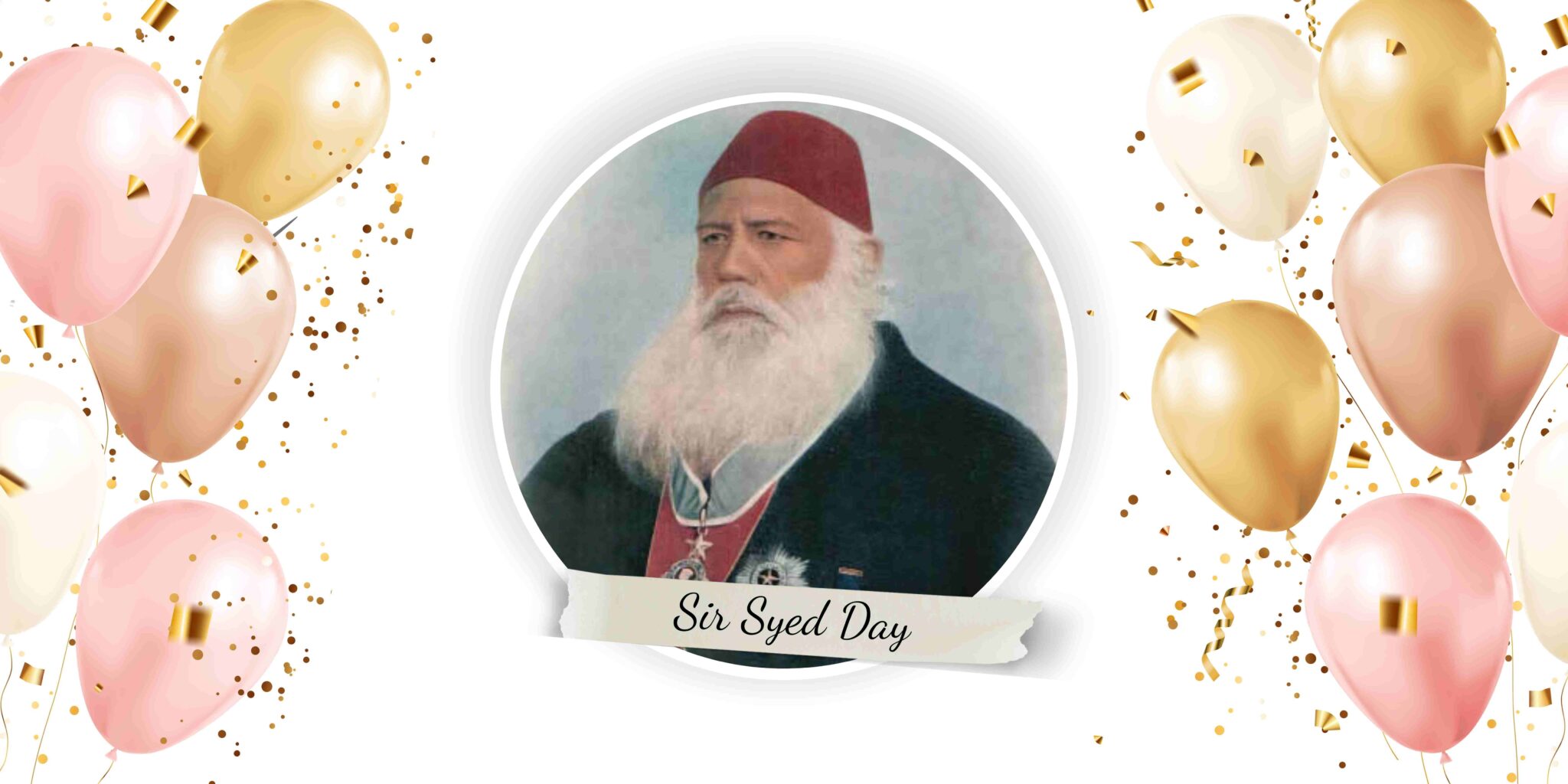
Sir Syed Day celebration

Sir syed Day

Sir Syed Day celebration

Sir Syed Day: AMU Honors Organizer on Birth Commemoration"

On the seventeenth of October, Sir Syed Ahmad Day is observed. He is considered one of the influential figures of the nineteenth century who played a significant role in shaping modern Indian history. Sir Syed Ahmad Khan (1817-1898) was undoubtedly a prominent figure in modern Indian history. His magnum opus, “Asar-us-Sanadid,” meticulously details the history of Delhi’s monuments. It was first published in 1847 and reprinted in 1854. Both editions of this work are available in the Public Documents of India’s library.

He witnessed the great uprising of 1857, and his works, namely “Asbab-i-Baghwat-I Rear” (1858) and a more detailed analysis of the resistance in Bijnor, where he was stationed as a judicial officer during the rebellion, is titled “Tarikh-isarkashi-I zila-e Bijnor” (1858). These might be the first comprehensive studies of the nature of the great revolt in any Indian language by any Indian figure. Despite being a follower, he provided genuine details and placed them in a perspective that attributed the blame for the uprising to the English authorities. He also advocated for Hindu-Muslim unity, encouraging Muslims to prioritize knowledge and morality before joining the public movement and strengthening their bonds with their Hindu brethren.

Sir Syed Day 2023: Recognition and Celebration

Sir Syed Day 2023 is not only a commemoration of a historical figure but a celebration of his enduring legacy. It is a day for reflecting on how his principles of modern education, scientific thinking, and social harmony remain relevant in today’s world. Various events and activities, including seminars, presentations, and cultural programs, are organized on this day.

The Relevance of Sir Syed's Principles in the Modern World

a. Promoting Education: Sir Syed’s belief in the transformative power of education continues to inspire us to pursue knowledge and provide quality education to all, regardless of their background. 

b. Embracing Science: In an era where technology and innovation drive progress, Sir Syed’s emphasis on science and critical thinking is more vital than ever.

c. Social Harmony: Sir Syed’s passionate efforts to promote unity among diverse communities serve as a beacon of hope in a world often marked by division and conflict.

Participating in Sir Syed Day 2023

Celebrating the Legacy of Sir Syed and AMU's Mumbai Connection

As students and alumni of Aligarh Muslim University (AMU) from around the world come together to celebrate the birthday of the visionary Sir Syed Ahmad Khan (1817-1898), known as Sir Syed, on October 17, they may recall a significant event in the struggle to transform Sir Syed’s institution, the Mohammedan Anglo-Oriental (MAO) College (founded in 1877), into AMU in 1920.

sir syed day invetation

If you are interested in being a part of this celebration, consider attending various events and seminars organized by institutions and organizations across the country. You can also engage with the spirit of Sir Syed’s teachings by supporting educational initiatives, promoting scientific literacy, and advocating for social harmony. People were also influenced by Sir Syed Quotes as well.

Pet Exam Full Form

Pet Exam Full Form

Pet Exam Full Form stands for Preliminary English Test, a standardised English language competency test. It is intended for intermediate-level students and is designed to evaluate the test-taker’s proficiency in using English in everyday contexts. The exam, which covers reading, writing, listening, and speaking abilities, is accepted as evidence of English language competency by many educational institutions and employers around the world.

A test-taker’s capacity to speak effectively in English in a range of contexts is demonstrated by passing it. It creates new possibilities for advancing one’s education or profession. We will examine the crucial dates, prerequisites, application procedure, exam structure, and other information in this article.

Pet Exam Full Form

Important Exam Dates

The Pet Exam Full Form is given on a variety of days throughout the year, depending on the location and authorized screening centre. For the most recent and correct information on the exam dates, it is crucial to contact the relevant school or testing location. To stay informed about the Civil Court Exam date and any Pet Exam, regularly visit the official website of the relevant district court or refer to the official recruitment notifications. 

Form of Application

You must complete the application form in order to register for the PET exam. You can obtain the application form from the official Cambridge Assessment English website or a licensed testing facility close to you. Your name, phone number, and identification number are among the personal information that must be entered into the form. Additionally, you must select the PET exam’s desired time and location.

Fee for Applications

Depending on the location and accredited exam centre, the application price for the Pet Exam Full Form exam may change. For the most recent and correct information regarding the application fee, it is crucial to contact the relevant school or testing location.

How Do You Apply for a PET?

The typical steps to apply for the PET exam are as follows:

  • To obtain the PET application form, go to the official Cambridge Assessment English website or a nearby certified exam location.
  • Name, contact information, and identification number should all be entered into the application form.
  • Select the PET exam’s chosen time and location.
  • Submit the application form that is fully filled out and pay the exam fee, which varies depending on the location and authorized centre.
  • The exam centre will send you a confirmation email or letter with your exam date, location, and other crucial facts.

Frequently Asked Questions

Q. What is PET?

A. Preliminary English Test, or PET. It’s a standardized test of English language competency that the University of Cambridge offers.

Q. How does PET operate?

A. PET measures the test-taker’s reading, writing, listening, and speaking abilities in context. It evaluates the capacity to use English successfully in a range of circumstances.

Q. What are the applications of PET?

A. Many institutions and employers throughout the world accept PET as evidence of English language proficiency. Opportunities for academic or professional progress may become available.

Eligibility Requirements

The following qualifications must be met in order to take the Pet Exam:

  • Exam level: The PET tests English language skills at CEFR Level B1 and is an intermediate-level exam.
  • Language ability: Applicants must be able to speak in everyday contexts and have a basic understanding of the English language.
  • Schooling requirements: The PET exam does not have any formal schooling prerequisites.

PET Admission Card

The Pet Exam Full Form admit card is a significant document that includes the candidate’s name, picture, and details about the exam’s date, time, and place. A few weeks before the test day, the PET admit card is usually made available. The admission card is available for download from the official exam website or in-person pickup at the testing location.

PET Exam Format

The four sections of the Pet Exam Full Form exam are reading, writing, hearing, and speaking. Here is a summary of the test format:

  • Reading: There are a total of 32 questions in the three segments of the reading section. This portion will take roughly an hour of your time.
  • Writing: There are two elements to the writing section. Candidates are required to produce a brief message or note for Part 1 and a longer composition for Part 2. This portion will take about 45 minutes to complete.
  • Listening: There are a total of 25 questions in the four segments of the listening section. This part will take about 30 minutes to complete.

PET Cut Off

Since the Pet Exam Full Form is graded on a pass/fail basis rather than a percentile basis, there is no official cut-off. Candidates must obtain a minimum score of 45 out of 100 on each segment of the PET exam and a total score of at least 140 out of 200 in order to pass. The cutoff scores for recognizing PET certificates as evidence of English competence, however, may vary between universities or organizations. Depending on the institution or organization and the needed degree of English ability, these cutoffs may change.

Conclusion

For students studying at the intermediate level, the Pet Exam Full Form is a useful tool for determining English language competency. It can create new prospects for academic or professional growth and is acknowledged by colleges and employers everywhere. Understanding the key dates, prerequisites, application procedure, exam format, and other information detailed in this article will help you better prepare for the PET exam and demonstrate your command of the English language. Good fortune!